How Was Fashion Effected by Worl War Ii
The Tomb of the Unknown Soldier memorial almost Kremlin, dedicated to all Soviet soldiers who gave their lives protecting their state in 1941-1945.
Getty Images
It is clear that during the most horrendous war in the history of mankind, the USSR suffered greater losses than whatsoever other country – but the verbal number of victims remains disputed.
In 1946, reacting to Winston Churchill's Fulton speech communication that marked the start of the Cold State of war, Joseph Stalin mentioned the Great Patriotic War (how Russians refer to the war with Nazi Germany) and stated that "as a result of the German language invasion, the Soviet Matrimony irrevocably lost… around seven million people." That was the first ever official Soviet stance on war casualties. And it was fake news.
Numbers abound
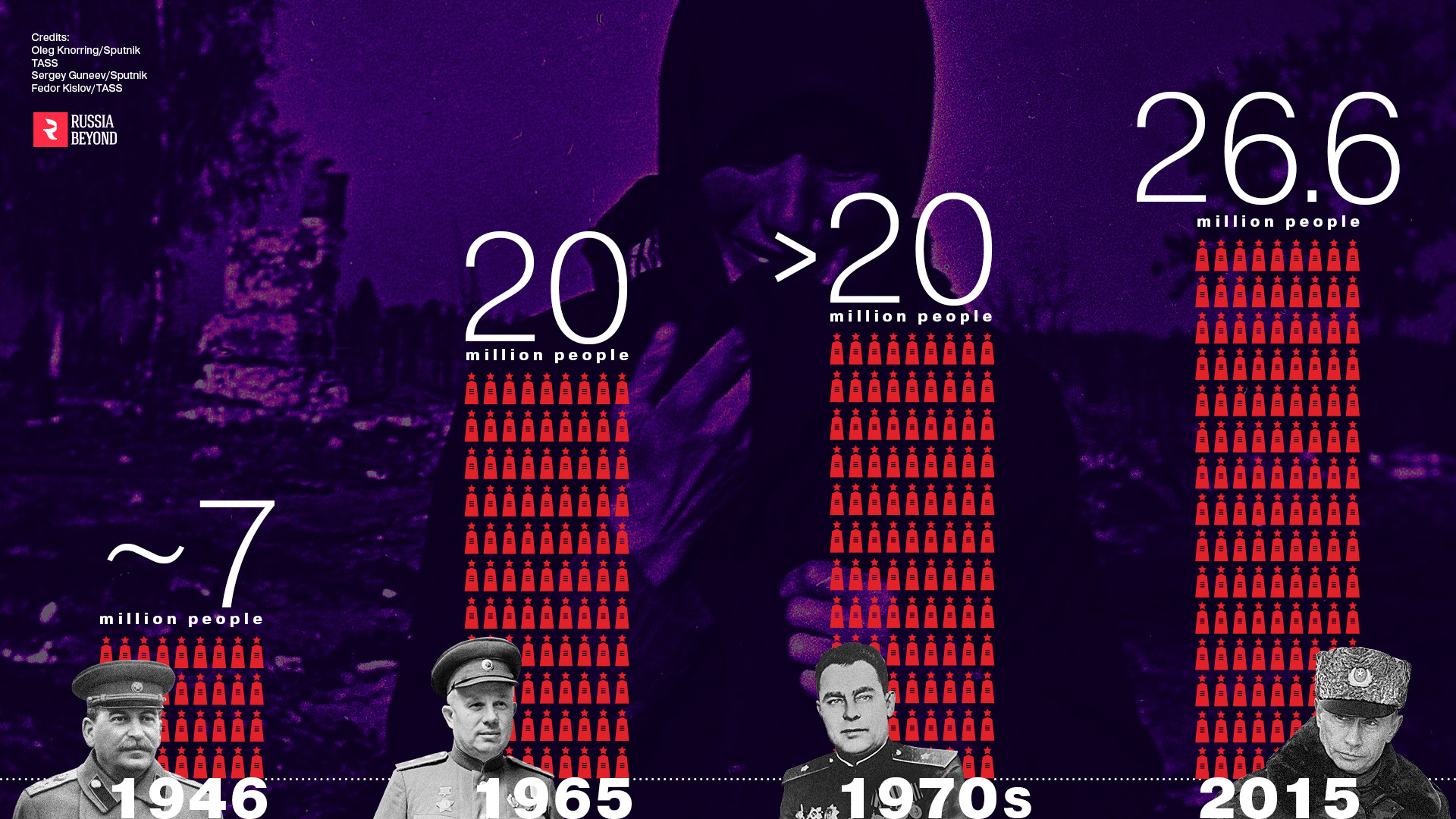
That's how the official judge of the number of people the USSR lost to WWII inverse from 1946 to 2015.
Alexander Kislov
"In fact, Stalin had knowledge of the other statistical data: 15 million casualties. This number was contained in a study delivered to him in early 1946, by the commission led by The State Planning Committee's president Nikolai Voznesensky,"Professor Viktor Zemskov of the Institute of Russian History notes. Zemskov supposes that Stalin was eager to hide the real scale of losses from both the Soviet citizens and the world – in order non to show the USSR as a state weakened by the war.
Nevertheless, the official seven-million approximate of casualties didn't final long, every bit most Soviet people believed that number to exist too low. In 1965, Nikita Khrushchev, who succeeded Stalin as USSR'south leader, mentioned a higher number: 20 million. Substantially, this is the number that became the official evaluation for the residue of the Soviet era – Leonid Brezhnev adhered to it too, merely added "more than" to the twenty million casualties.
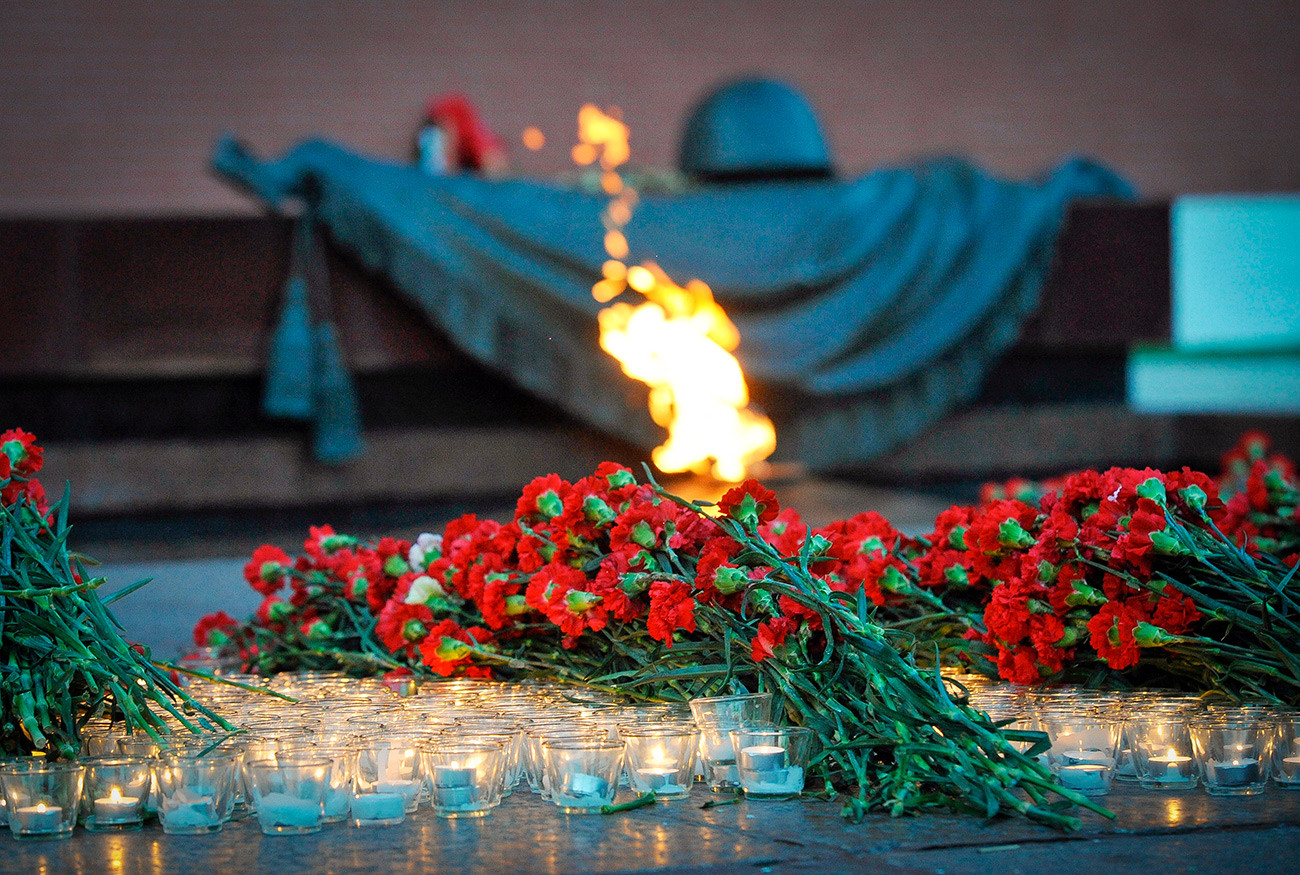
The Unknown Soldier memorial often is decorated with flowers.
Artem Korotaev/TASS
Both Khrushchev and Brezhnev used the phrase "the war cost the country…" to lump everyone together, not separating those who died in the battlefield, victims of German occupation, those who starved to death, etc.
After the dissolution of the USSR, the estimate grew again. According to the latest statements that Russian government officially acknowledge, overall losses (both among soldiers and civilians) amounted to 26,6 one thousand thousand people. That's the official evaluation of the losses today (in 2019) – at least, it's the number Russian land officials mention on Victory day, commemorations and and so on.
Devil in the details
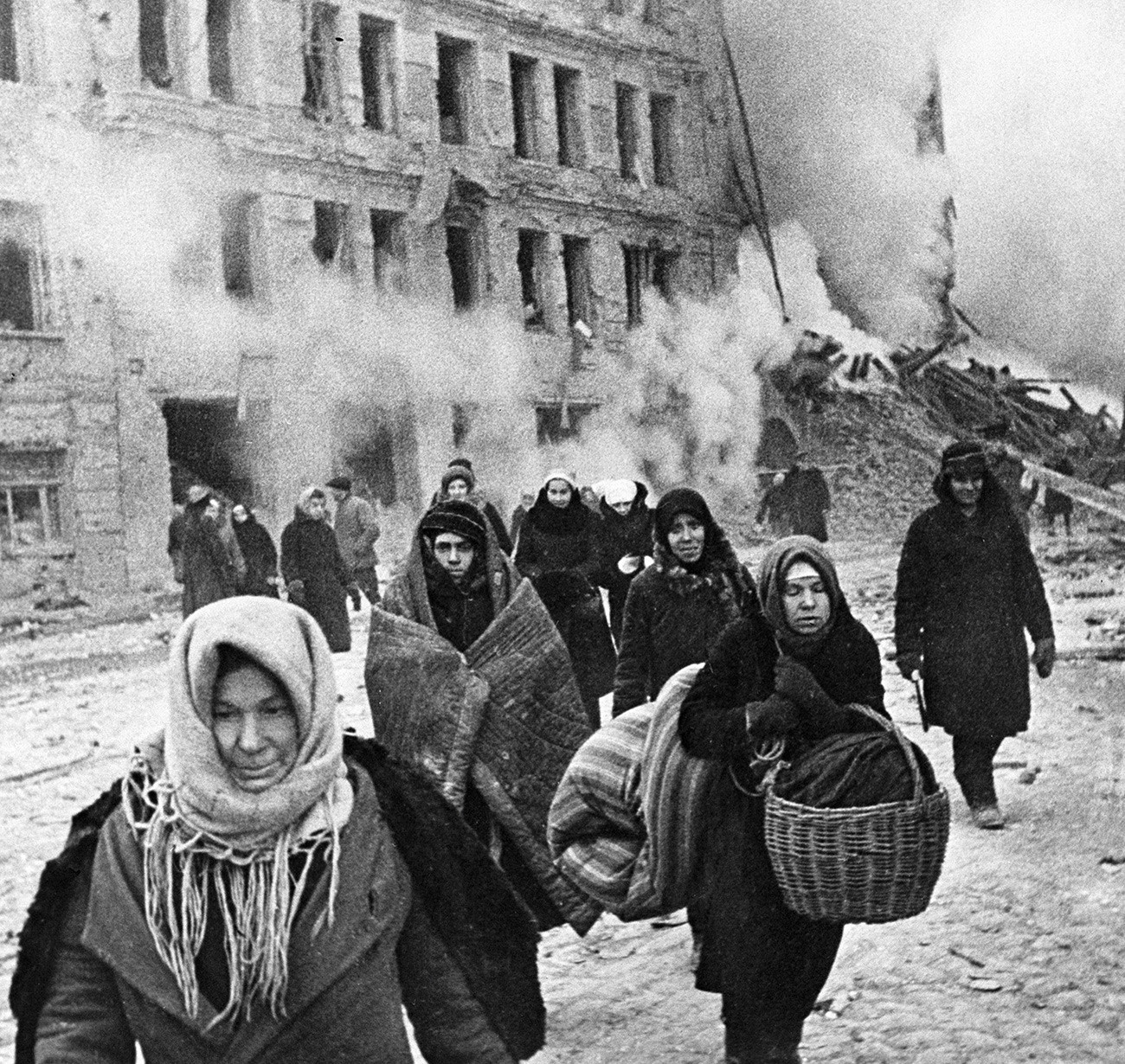
Citizens of St. petersburg during the siege of the metropolis (1941 - 1943).
Boris Kudoyarov/Sputnik
While dealing with those numbers, they didn't take the whole World State of war II into account, but rather simply the war between the USSR and Nazi Frg between 1941-1945, excluding the Soviet operations between 1939-1941 (the invasion of Poland and the Winter War with Republic of finland) and the Soviet-Japanese state of war of 1945.
Another important nuance is that the official estimate, given by the Ministry of Defence in 2015, separates the number of losses (26,6 one thousand thousand people) into the two following categories:
- Around 12 meg soldiers were killed in the battlefield, captured (not having returned) or gone missing.
- The rest (approximately xiv,half-dozen million people) were civilians who died in the occupation zones, were forcefully moved to Germany (and did not come dorsum) or lost their lives to starvation, illnesses and so on.
Greater losses?
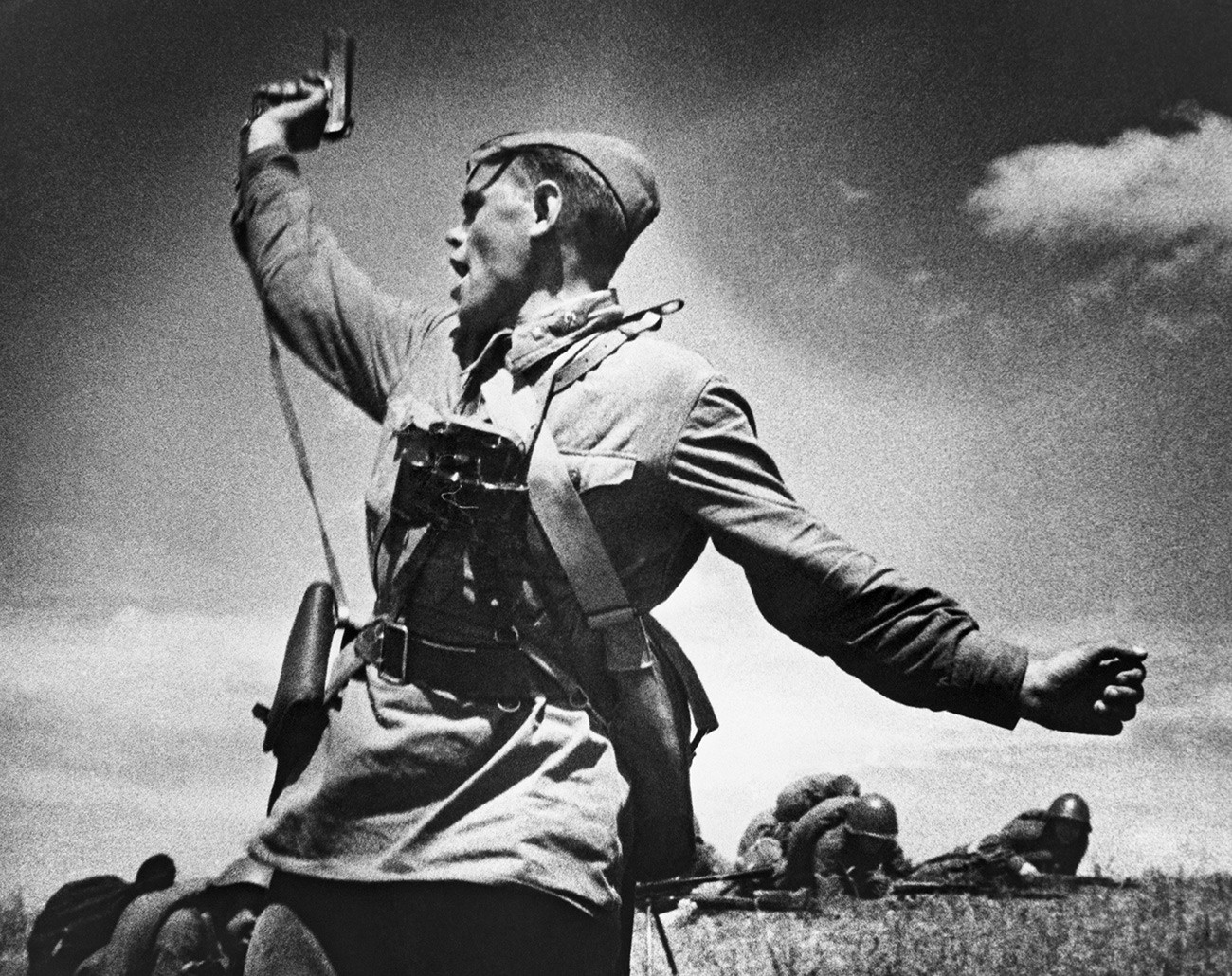
A Soviet officer raising his unit of measurement for an set on.
Maz Alpert/Sputnik
The 26,six million estimate of losses conspicuously is official (equally of at present), merely far from being the only one. Though the Great Patriotic War concluded nigh 75 years ago, the war of numbers even so goes on, with dissimilar historians proposing different ways to measure the number of losses.
On the one hand, from time to time occurring versions suggest even bigger losses than the official estimate. For instance, in 2017, Nikolai Zemtsov, Deputy of the Russian Country Duma, stated that "the USSR irrevocably lost almost 42 million people due to [the Great Patriotic] war factors." That version, however, is very hundred-to-one – Zemtsov included in that enormous number not only people who actually died, merely children who were not born due to the state of war – which is incorrect, as professional demographers state.
Or overestimation?
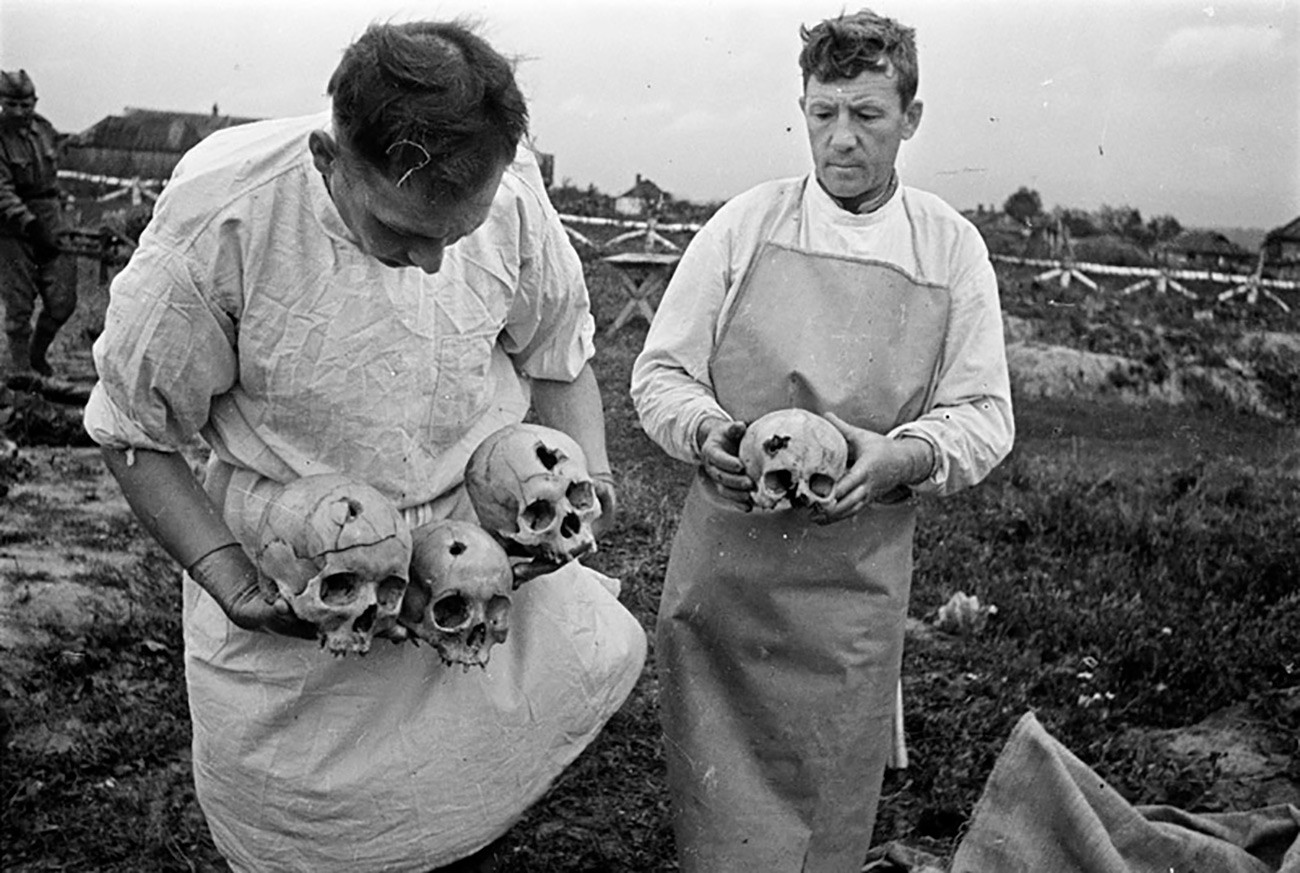
Soviet forensic archaeologists studying dead bodies found in a concentration army camp, 1943.
russiainphoto.ru
On the other hand, there are opinions that suggest 26,six one thousand thousand is already an overestimation. In his 2015 commodity, Viktor Zemskov suggested that the estimation of war casualties (11,five – 12 million) is correct, but the number of civilian losses due to war factors includes as well many people: "Such statistics include the increased mortality in the Soviet abode front considering of malnutrition, overburdening work and so on… I disagree with such an approach."
According to Zemskov, it is too hard to distinguish between deaths caused past war and natural reasons in this case – so to be more precise, historians should have just included in the number of noncombatant deaths acquired by war, i.east. those killed directly past Germans, past bombardments, those who died during the Siege of Leningrad – that amounts to 4,5 million victims. Combined with actual war casualties, that gives u.s. xvi one thousand thousand people. Nevertheless, official statistics comprehend a larger number of people.
While the statement on the evaluation methods can go on forever, one thing is undeniable: during the Keen Patriotic War, the USSR lost a great number of people – stiff and passionate men and women in their prime – merely information technology saved the world from High german Nazism. The price of victory was terrible, merely the price of defeat would take been unthinkable.
If using whatsoever of Russia Beyond's content, partly or in full, always provide an agile hyperlink to the original textile.
Get the week's all-time stories directly to your inbox
0 Response to "How Was Fashion Effected by Worl War Ii"
Post a Comment